

Sweeping proposed changes to the federal Section 106 process could have a devastating impact on historic preservation. The changes would affect historic properties of every kind—not only Native American sites, but also historic buildings, neighborhoods, battlefields, cemeteries, archaeological sites, cultural landscapes, and other places that are listed in or eligible for the National Register of Historic Places.
The consequences would be especially serious for Native cultural resources. Many Native archaeological sites, sacred places, ancestral landscapes, burial places, and historic travel routes have never been formally recorded. Some have no buildings, monuments, or other features that would make their significance apparent to someone unfamiliar with their history. Section 106 is often the process through which these places are identified, their importance is recognized, and affected Tribal Nations are given an opportunity to speak for their protection before damage occurs.
Three cases in Tennessee—the Gallatin Fossil Plant, a highway-widening project in Townsend, and damage to the Unicoi Turnpike and Trail of Tears National Historic Trail—show what Section 106 does in practice. These cases are just a few examples that demonstrate why the regulations governing the process matter.
Congress passed the National Historic Preservation Act in 1966 to establish a national policy for preserving the country’s historic places. The Act created the National Register of Historic Places and the Advisory Council on Historic Preservation, an independent federal agency that oversees the federal historic-preservation review process. Section 106 applies to a federal undertaking—a project, activity, or program carried out, funded, licensed, permitted, or approved by a federal agency—that has the potential to affect historic properties. It requires the agency to consider the effects of its undertaking on properties listed in or eligible for the National Register and to give the Advisory Council an opportunity to comment. Section 106 does not automatically stop a project, and it does not guarantee that every historic property will be preserved. It establishes a process for making informed decisions. Under the existing regulations, federal agencies must make reasonable efforts to:
In Tennessee, the Tennessee Historical Commission serves as the State Historic Preservation Office. In that role, Commission staff represent the state’s historic-preservation interests, advise federal agencies, and participate in Section 106 consultation concerning historic properties in Tennessee.
When an undertaking may affect historic properties of religious and cultural significance to Tribal Nations, federal agencies must consult with the appropriate federally recognized Tribes. This is government-to-government consultation with sovereign Tribal Nations, not simply another form of public comment.
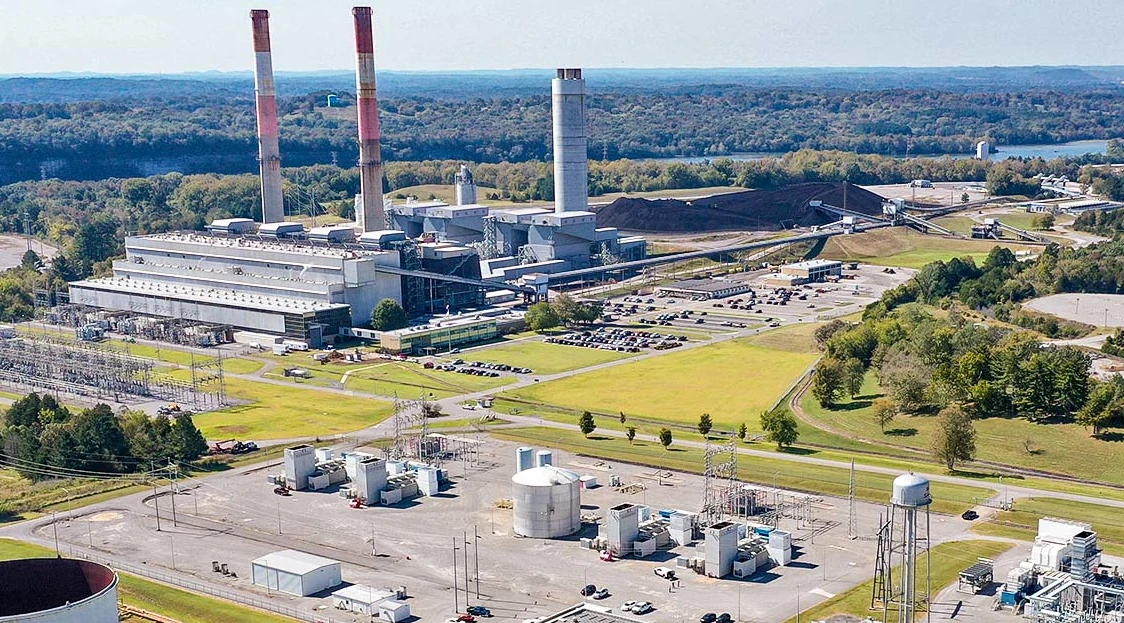
When selecting a location for a new dry-storage facility at the Tennessee Valley Authority’s Gallatin Fossil Plant in Sumner County, TVA avoided significant Native American cultural resources. The record shows that this avoidance was a direct result of TVA’s Section 106 compliance efforts. Four stone-feature sites had been identified during previous Section 106 surveys for other projects at the plant, found potentially eligible for inclusion in the National Register of Historic Places, and considered sacred by the federally recognized Indian tribes TVA consulted. Because these resources had been identified and considered during project planning, TVA was able to select a location that avoided effects to them.
Section 106 also guided TVA’s treatment of six historic cemeteries dating from 1810 to 1950 that would be affected by the larger coal-ash closure and landfill-expansion project. Five of the cemeteries were treated as potentially eligible for inclusion in the National Register and, in consultation with the Tennessee Historical Commission in its role as the State Historic Preservation Office, TVA developed a formal agreement for resolving the project’s adverse effects. The agreement required additional archival and genealogical research, accurate mapping of the cemeteries and graves, outreach to descendants, local historians, and Gallatin’s African American community, respectful relocation and reinterment, and measures to preserve and interpret the history represented by the cemeteries. Unlike the stone-feature sites, these resources could not be avoided. In this case, Section 106 provided the process for identifying their historical significance, involving affected communities, and mitigating the damage caused by their relocation.
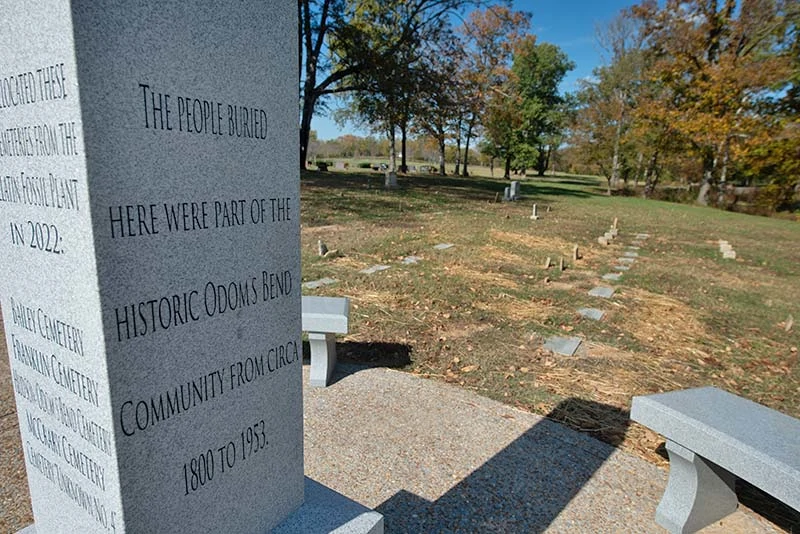
Taken together, the records show the practical results of Section 106 compliance. Archaeological surveys conducted under Section 106 identified Native resources; consultation helped establish their significance; and TVA chose a project location that avoided effects to them. For six historic cemeteries that could not be avoided, Section 106 required additional research, consultation, documentation, respectful relocation and reinterment, and measures to preserve and interpret their history. The process did not preserve every resource in place, but it ensured that their significance was considered and the project’s effects were addressed before construction proceeded. The storage facility could move forward while avoiding irreplaceable Native sites and requiring careful treatment of historic cemeteries that could not remain in place.
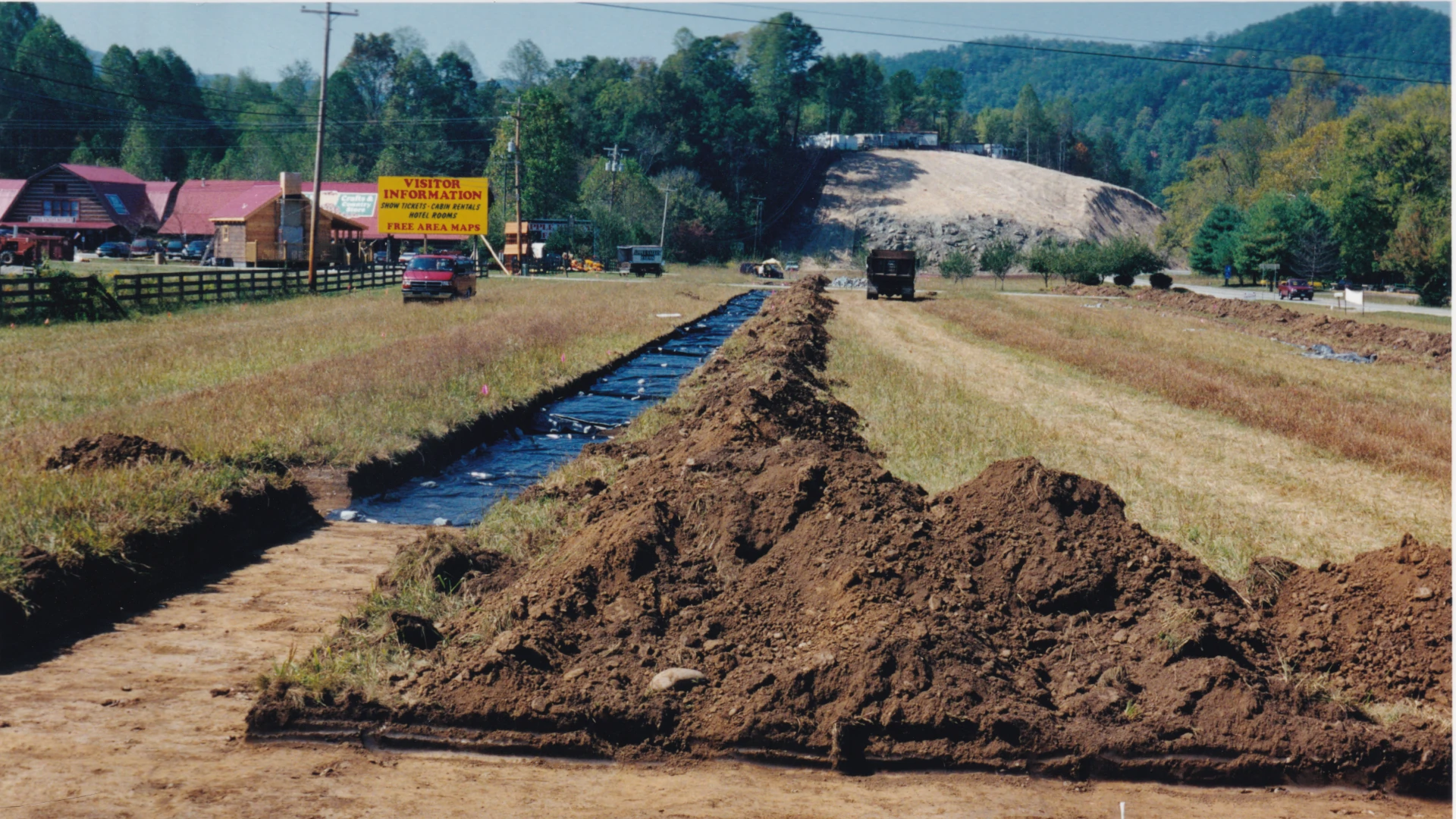
In the late 1990s, the Tennessee Department of Transportation planned to widen State Route 73/U.S. 321 and State Route 337 through Townsend in Blount County, from Kinzel Springs to the Great Smoky Mountains National Park. Because the federally connected highway project was subject to Section 106, archaeological investigations were conducted before construction.
What archaeologists found within the proposed right-of-way was extraordinary. Archaeological field investigations were conducted principally from 1999 through 2001, followed by years of analysis, reporting, and specialized research. The University of Tennessee’s Center for Transportation Research Archaeological Services Group and the Tennessee Division of Archaeology investigated several sites, including 40BT89, 40BT90, 40BT91, and 40BT94. The work documented approximately 3,395 cultural features and thousands of postholes associated with several thousand years of Native occupation in Tuckaleechee Cove.
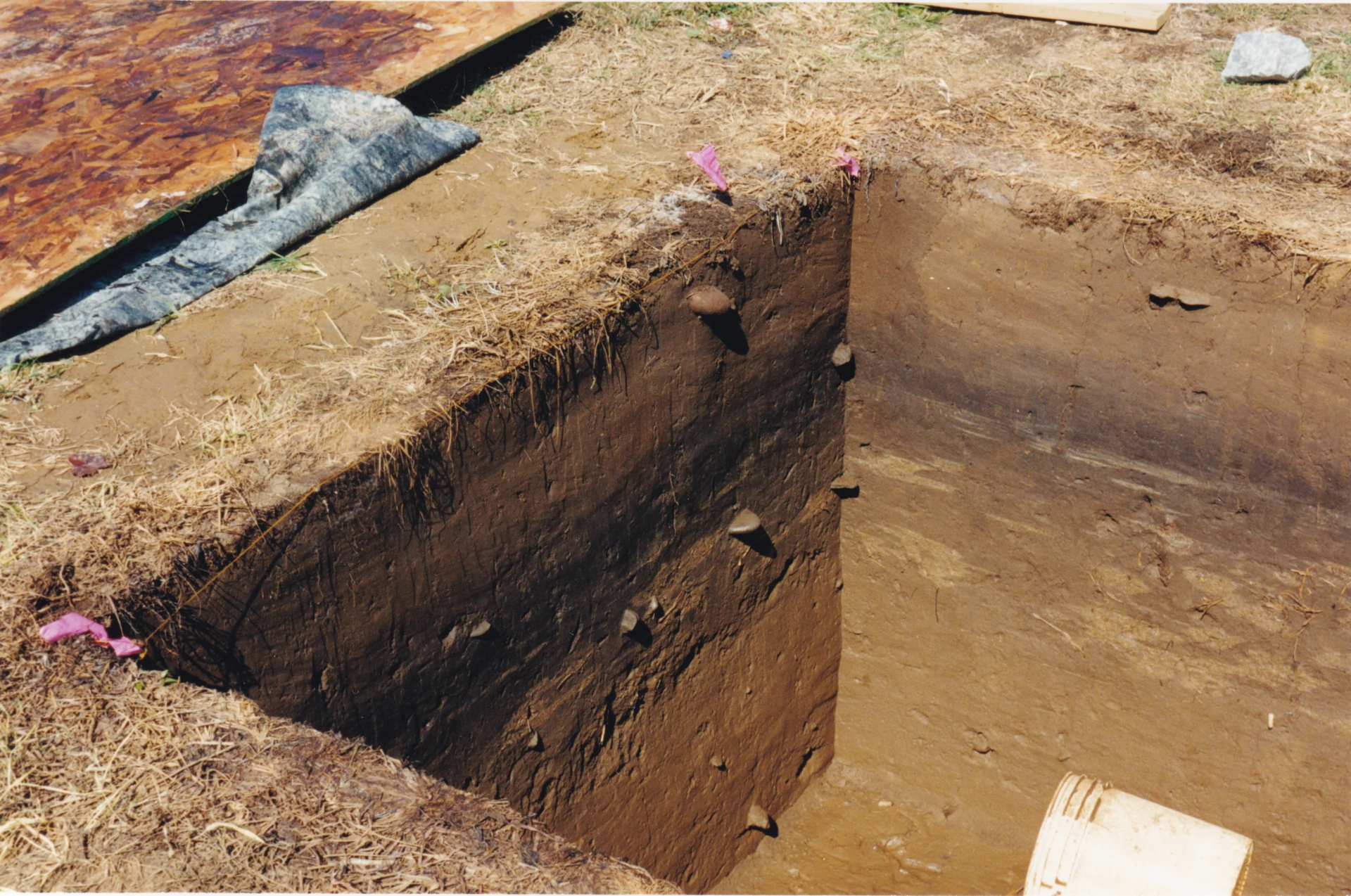
The discoveries included evidence from the Late Archaic and Early Woodland periods, substantial Middle Woodland occupations, Mississippian settlements and farmsteads, and seventeenth-century Cherokee households. Among the findings were structures, storage and cooking pits, pottery, stone tools, food remains, and other evidence that allowed researchers to reconstruct how Native people lived in this mountain cove and how their communities interacted with people in the Tennessee Valley and across the Appalachian Mountains.
Before the Townsend project, relatively little was known archaeologically about the long Native occupation of Tuckaleechee Cove. The highway investigations produced an extensive collection that has supported years of subsequent research, including technical reports, graduate theses, scholarly articles, and detailed studies of Woodland, Mississippian, and Cherokee life.
Data recovery is not the same as preserving an archaeological site in place. Once excavation is complete and a highway is built across a site, the place itself cannot be restored. Avoidance is generally preferable. But when avoidance is not feasible, systematic excavation, analysis, curation, and publication can preserve knowledge that otherwise might be destroyed by construction without ever being recognized or recorded.
The Townsend Archaeological Project illustrates one of Section 106’s most important functions. The review did not prevent the highway improvement, but it ensured that the land was examined before construction. As a result, previously unknown chapters of Tennessee’s Native history were identified, documented, and made available for continuing study rather than being lost beneath the roadway.
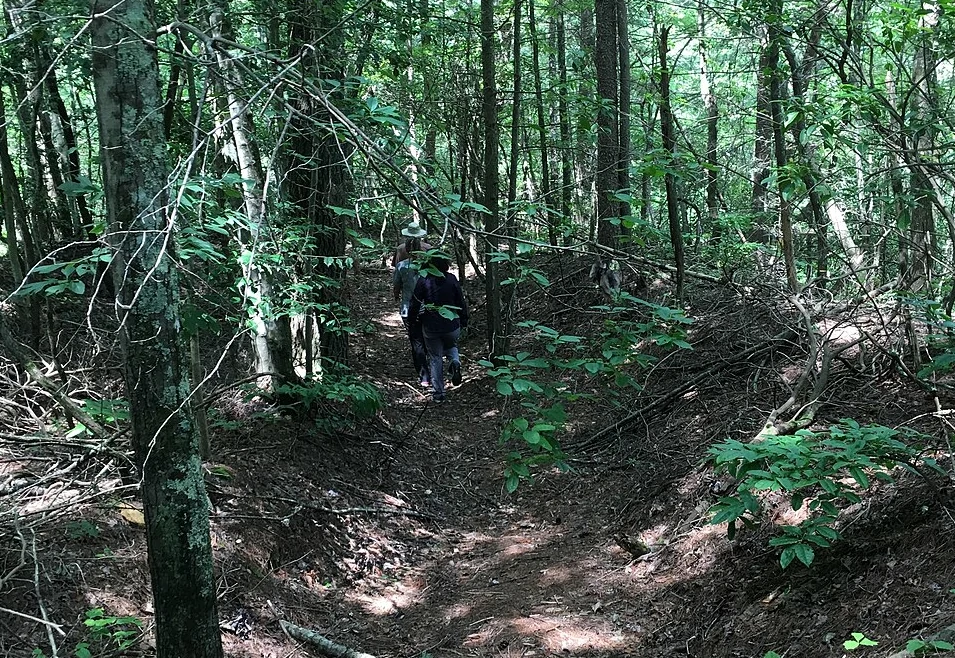
The Unicoi Turnpike crosses the mountains of East Tennessee along a much older Native travel corridor. A portion in Monroe County was used during the forced removal of the Cherokee people and is part of the Trail of Tears National Historic Trail. Consulting Tribal Nations regard the turnpike, the Trail of Tears route, and nearby Fort Armistead as sacred places.
In March and June 2014, work intended to control erosion and prevent unauthorized vehicle access severely damaged a 1.05-mile segment of the historic roadbed in the Cherokee National Forest. Heavy equipment excavated approximately 35 trenches across the trail, some nearly three feet deep, and piled the removed soil into adjoining berms. Additional trenches and other ground disturbance affected the surrounding area.
The work was performed before the required historic-preservation review and consultation had been completed. The damage was not discovered until 2015, after representatives participating in a National Park Service planning meeting visited the trail. The Forest Service subsequently notified Tribal Nations, the Tennessee Historical Commission, and the Advisory Council on Historic Preservation that the work had adversely affected the historic property.
Tribal representatives emphasized that the harm was not limited to the trail’s physical fabric. The disturbed segment is part of a landscape associated with Cherokee history, forced removal, memory, and continuing cultural and spiritual relationships. Physical reconstruction could not erase the spiritual injury caused by excavating a sacred place without consultation.
Section 106 then provided the framework for addressing the violation. Consultation eventually produced a 2019 memorandum of agreement among the Forest Service, the Tennessee Historical Commission, the Advisory Council, numerous Tribal Nations, and other participating organizations. The agreement provided for archaeologically controlled remediation of the damaged trail and a broader mitigation program emphasizing interpretation, staff training, Tribal youth engagement, and improved collaborative planning and management of the Trail of Tears in the Cherokee National Forest and throughout the Forest Service’s Southern Region.
The Unicoi Turnpike case demonstrates both the value and the limitations of Section 106. Consultation after damage can require remediation, education, institutional change, and accountability. It cannot make an irreplaceable place whole again. The central purpose of the process is to identify historic properties and consider consequences before federal decisions or actions cause harm. The agreement also required the Forest Service to complete and advance the National Historic Landmark nomination for nearby Fort Armistead, a removal-era military post possessing unusually intact archaeological remains. Although a draft nomination had been prepared before the damage occurred, completing it became part of the Section 106 mitigation. Following extensive tribal consultation, Fort Armistead was designated a National Historic Landmark in 2023. The designation did not undo the damage to the historic road, but it provided national recognition and an additional measure of protection for one of the most important surviving archaeological sites associated with Cherokee removal.
The Advisory Council on Historic Preservation has voted to advance sweeping proposed revisions to the regulations implementing Section 106, found at 36 C.F.R. Part 800. The vote did not adopt a final rule. The draft is proceeding through additional federal review before publication as a Notice of Proposed Rulemaking and a formal period for public comment.
The National Association of Tribal Historic Preservation Officers, or NATHPO, voted against advancing the proposal. NATHPO’s analysis is especially important because the organization represents Tribal Historic Preservation Officers and serves as a voting member of the Advisory Council.
According to NATHPO, the proposed regulations would:
NATHPO says the changes would substantially restructure the process, weaken Tribal consultation, narrow consideration of places of religious and cultural significance, and place considerably greater control in the hands of the federal agencies carrying out or approving projects.
These concerns are not limited to Native resources. Section 106 applies to all historic properties listed in or eligible for the National Register. Reducing identification efforts, public participation, consideration of project effects, or negotiated mitigation would also affect historic neighborhoods, buildings, industrial sites, rural landscapes, cemeteries, battlefields, and archaeological sites associated with every period and community in American history.
The consequences may be particularly severe for Native places because many cannot be identified solely through standing structures, archaeological deposits, or sharply drawn boundaries. As NATHPO explains, the cultural significance of a place may arise from relationships among waterways, mountains, gathering areas, travel routes, plants, animals, view-sheds, ceremonial settings, oral traditions, and continuing cultural responsibilities. A rule that discounts places without visible “improvements,” or that limits consideration of changes to setting, sound, access, water, vegetation, or ceremonial conditions, would fail to recognize how such places are experienced and why they matter
The Tennessee examples make one point especially clear: Section 106 does not prevent necessary public projects from moving forward.
At Gallatin, TVA selected a location that avoided significant Native resources. At Townsend, Section 106 review ensured that thousands of years of Native history were investigated and recorded before a highway was widened across the sites. At the Unicoi Turnpike, the failure to conduct proper review and consultation caused avoidable damage, years of conflict, and the need for an extensive remediation and mitigation agreement.
Section 106 works best when agencies begin consultation early, identify historic properties before decisions become difficult to change, listen to people with knowledge of the places involved, and seriously consider avoidance. Weakening those requirements would not improve federal decision-making. It would increase the likelihood that important places remain unknown until they are damaged—or are never recognized at all.
Historic properties are nonrenewable. A highway can be realigned, a facility can sometimes be moved, and a project design can be changed. Once an archaeological site, sacred place, cemetery, historic building, or cultural landscape is destroyed, however, no later study or mitigation agreement can fully restore what was lost.
That is why the regulations implementing Section 106 matter. They determine whose knowledge agencies must seek, which places must be considered, what effects must be examined, whether the public has a voice, and whether agencies must work with others to avoid or address harm before proceeding. Sweeping changes to those regulations demand a transparent and deliberative process—and the meaningful participation of Tribal Nations, preservation organizations, affected communities, and the public.
The Tennessee Historical Commission suggests actions we can take in response to the proposed changes:
The Tennessee Historical Commission also recommends following the Commission and other historic-preservation organizations to stay informed about further developments. A link to the Commission’s website is included in the Sources and Further Reading section below.
Native History Association, National Historic Preservation Act
National Association of Tribal Historic Preservation Officers, “ACHP Advances Sweeping Revisions to the Section 106 Regulations,” July 2026
Advisory Council on Historic Preservation, “ACHP Votes to Move Forward with Notice of Proposed Rulemaking,” July 24, 2026
Tennessee Historical Commission, “Section 106 Proposed Revisions,” July 2026
Tennessee Valley Authority, “Gallatin Fossil Plant Surface Impoundment Closure and Restoration Project: Final Environmental Impact Statement,” August 2020, especially pp. 51–52 and 175–179
Tennessee Valley Authority, “Progress Report on Implementation of Executive Order 13287: Preserve America, 2023,”
Tennessee Division of Archaeology, “Current Research in Tennessee Archaeology, “An Overview of the Townsend Archaeological Project, 1999–2012,” January 2013, page 7.
University of Tennessee Archaeological Research Laboratory, “The Mississippian Period Occupation of Tuckaleechee Cove, Blount County, Tennessee,” April 2013
Advisory Council on Historic Preservation, “USFS MOA for Remediation of Damage to the Trail of Tears in Cherokee National Forest,” December 10, 2019
National Park Service, “Trail of Tears National Historic Trail Project Updates,” April 2016

