

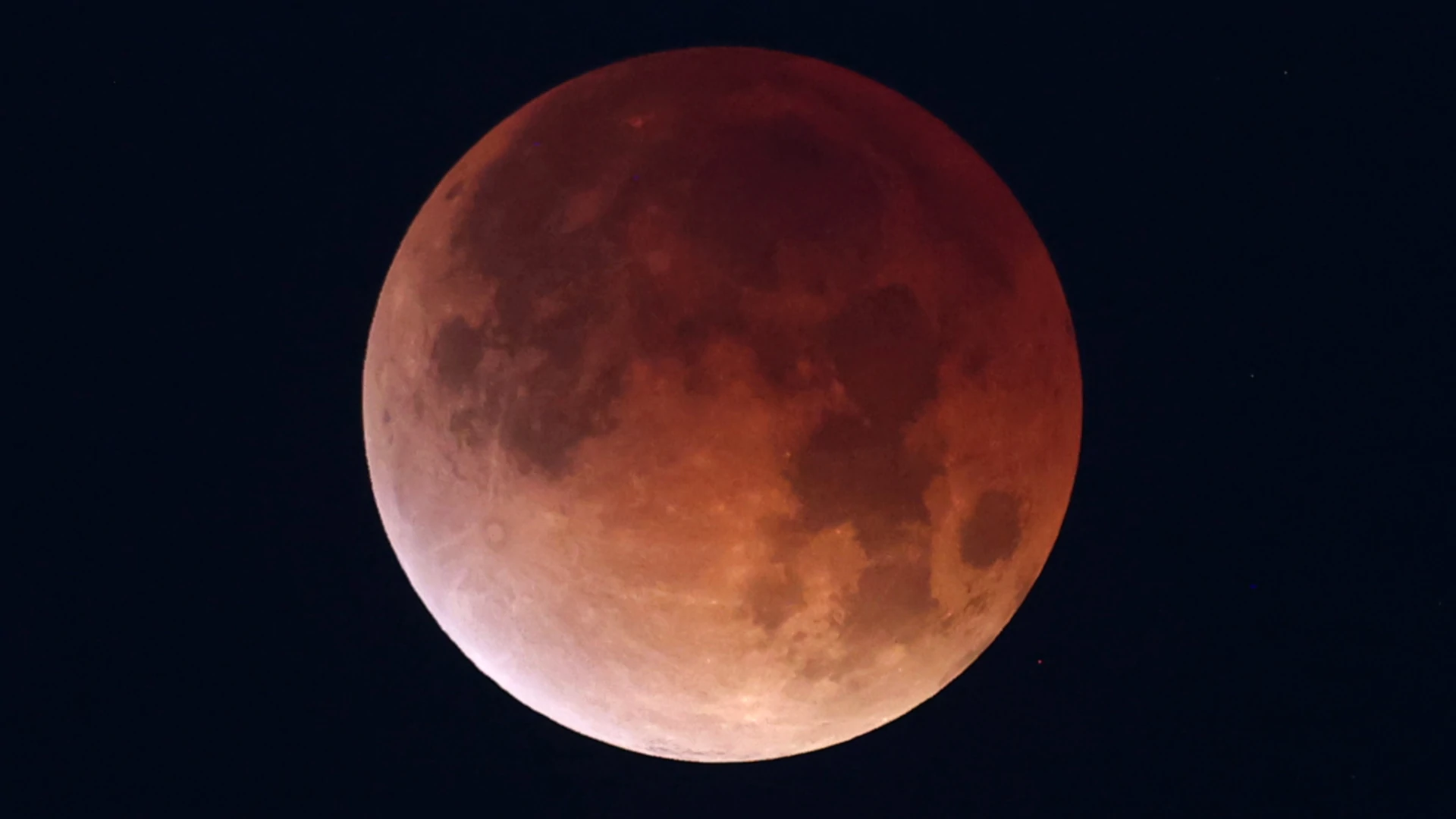
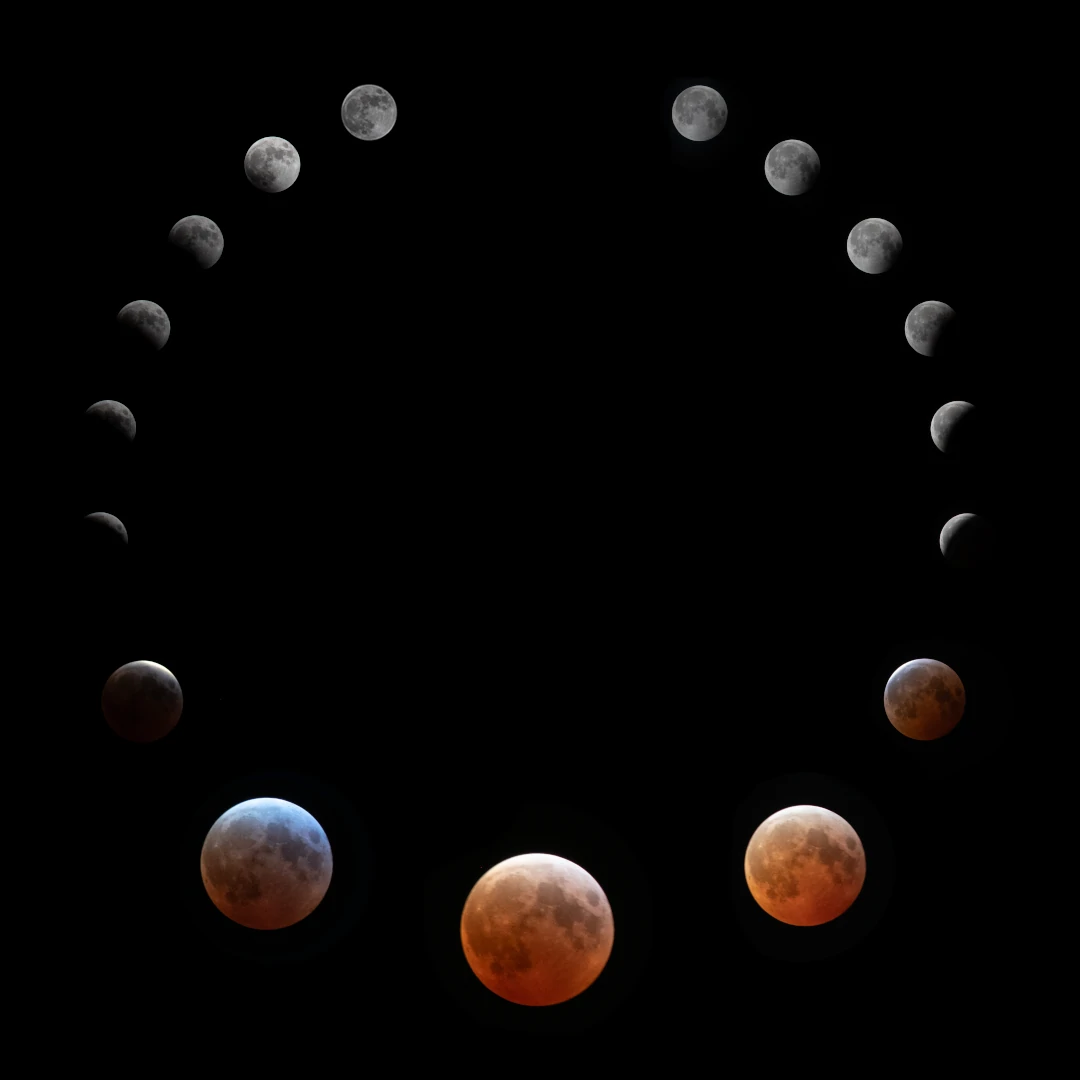
On Thursday night, August 27, 2026, Earth’s shadow will begin moving across the Moon. The first part of the eclipse will be subtle, but by 9:34 p.m. CDT, the dark central shadow of Earth—the umbra—will begin taking a clearly visible “bite” from one edge of the lunar disk.
At 11:13 p.m., about 96 percent of the Moon’s visible disk will lie inside Earth’s umbra. The eclipse will fall just short of totality. The uncovered sliver of the Moon will remain bright while most of the disk may take on muted shades of red, brown, or copper.
The lunar eclipse will be a striking astronomical event, and also provides an opportunity to look at how eclipses appear in the historical records of Native nations.
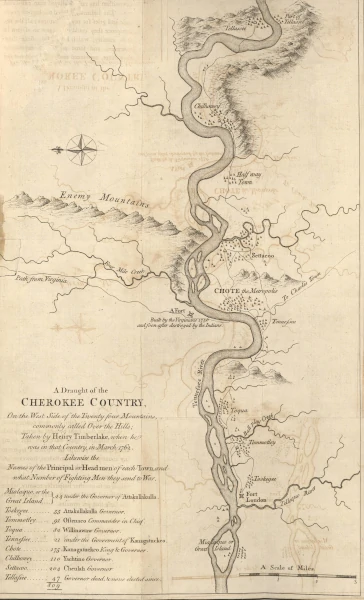
One of the earliest written descriptions comes from colonial trader James Adair. In *The History of the American Indians*, published in 1775, Adair recalled the first lunar eclipse he witnessed after he began living among Native people. He placed the event among the Cherokee in 1736. Two total lunar eclipses were visible from Cherokee country in 1736 - one on March 27 and another on September 20 by modern astronomical dating - but we don't know which one he witnessed.
Adair described people's reactions to the eclipse:
“They all ran wild, this way and that way, like lunatics, firing their guns,whooping and hallooing, beating of kettles, ringing horse-bells, and making the most horrid noises that human beings possibly could.”
His basic observation is unmistakable: the community responded to the eclipse by producing as much noise as possible. He concluded that it was done “to assist the suffering moon.” This account gives us unusually vivid evidence of a Cherokee response to a lunar eclipse nearly three centuries ago.
Immediately after describing the Cherokee response, Adair mentioned a belief he attributed to “some of the East-Indians,” meaning people in Asia, that a monster resembling a bullfrog now and then attacked the Sun or Moon, and they would frighten it away, but he doesn't specifically say this belief was shared by the Cherokee.
The Cherokee connection between eclipses and a Great Frog appears explicitly in the work of ethnographer James Mooney. Mooney collected much of the material for Myths of the Cherokee while working with Cherokee speakers and traditional knowledge holders principally between 1887 and 1890. His book was published in 1900.
In the entry “The Moon And The Thunders”, as told by Aʻyûñ′inĭ, “Swimmer,” a Cherokee “priest, doctor, and keeper of tradition,” Mooney wrote:
“When the sun or moon is eclipsed it is because a great frog up in the sky is trying to swallow it. Everybody knows this, even the Creeks and the other tribes, and in the olden times, eighty or a hundred years ago, before the great medicine men were all dead, whenever they saw the sun grow dark the people would come together and fire guns and beat the drum, and in a little while this would frighten off the great frog and the sun would be all right again.”
In a separate explanatory note, Mooney recorded the Cherokee expression *nûñdă′ walâ′sĭ u′giskă′*, which he translated as “the frog is swallowing the sun or moon.”
Another Cherokee expression for eclipse is Nvdo tsulisihvsgiyi – The time when the sun and moon get dark. This expression was used in the Cherokee Almanac for 1838 (published in 1837). The Almanac, which was published in English and Cherokee, was written and translated at the direction of Samuel Worcester, the missionary who was the plaintiff in Worcester vs. Georgia, the case that the Cherokee won before the Supreme Court in 1832 that should have stopped the removal of the Cherokee, but Andrew Jackson refused to enforce. As noted by the website Your Grandmother's Cherokee, Worcester many not have wanted to use the older expression referring to the Great Frog, or the “darkening” expression may have also been used generally.
A later Cherokee Almanac, issued in 1850 for 1851, contains an unexpected reference to Walosi, “Frog”, in the Cherokee-language version of an article titled “Influence of the Moon”; the corresponding English text contains no Frog reference. The article refutes popular “superstitions” related to the moon. The Cherokee language version contains a statement that is difficult to translate independently, but its approximate meaning may be “it would not be through the Frog” or “it would not be the Frog’s doing.” The statement's precise relationship to the eclipse tradition is uncertain.
The "Great Frog" eclipse tradition still survives in contemporary Cherokee sources.
In 2017, Cherokee Nation citizen and language specialist Roy Boney Jr. recorded the story in Cherokee and English. After describing the Frog swallowing the Sun, he states plainly, “And sometimes the frog swallows the moon.” The Cherokee Nation shared the presentation as part of its observance of the 2017 solar eclipse.
In 2024, the Cherokee Phoenix, the Cherokee Nation’s tribal newspaper, likewise explained that Cherokee people believed Walosi (Frog) was eating the Sun or Moon as the light disappeared. The article quoted Boney describing people banging rocks together, shaking shells, and shouting. Guns and firecrackers were added after those objects entered Cherokee life.
Frank G. Speck’s *Ethnology of the Yuchi Indians* provides direct lunar-eclipse testimony from another southeastern nation. Speck spent portions of 1904 and 1905 working among Yuchi people living in the Creek Nation in Indian Territory. He identified several community and ceremonial leaders who contributed to his research, although he did not state which individual supplied the eclipse passage.
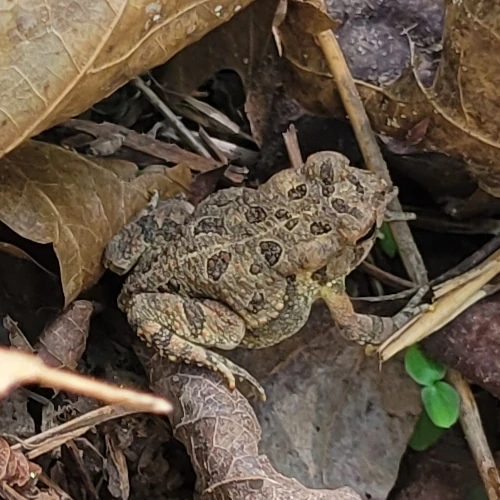
Speck recorded that a toad began eating the Moon. As the toad grew, the Moon diminished. People frightened the toad away, after which the Moon recovered and grew again.
Robert F. Greenlee preserved a named Big Cypress Seminole recollection in his 1945 article “Folktales of the Florida Seminole.” Greenlee collected the material in 1939 from Josie Billie, a Mikasuki-speaking Seminole medicine man.
Greenlee’s general discussion associated an eclipse of the Sun with a toad frog and described gunfire—and formerly arrows—intended to stop it. He then recorded Billie’s childhood memory that people at his father’s camp fired guns and raised “a great clamor when either the sun or the moon suffered eclipse.”
John R. Swanton’s 1922 reconstruction “Tokulki of Tulsa” attributes a solar eclipse to a great toad that Muskogee people attempted to frighten away, but says that a lunar eclipse attracted little attention.
The historical record does not support speaking of a single “Native American eclipse belief.” Nations and communities maintained their own languages, traditions, and responses. Even within a nation, explanations could differ.
Choctaw records primarily concern the Sun. Horatio Cushman, who grew up in Choctaw country before Removal, wrote in 1899 that he had witnessed Choctaw people respond to more than one solar eclipse. According to Cushman, they believed a black squirrel was attempting to devour the Sun. Women shouted and beat metal vessels, dogs barked, and men fired guns toward the Sun to frighten the squirrel away.
Choctaw minister and Trail of Tears survivor Israel Folsom also described large black squirrels attacking the darkening Sun. People shouted, threw sticks, and shot arrows toward them. A 2024 article from the Choctaw Nation Historic Preservation Department emphasizes that this was not the only Choctaw interpretation. Other communities understood an eclipse as the Sun cleansing itself or resting.
Cushman attributed a markedly different outlook to the Chickasaw. He claimed that they regarded eclipses as inexplicable natural phenomena beyond human control and did not become alarmed. He recorded *hushi luma*, “Sun hidden,” for an eclipse of either the Sun or Moon, with “dead Sun” and “lost Sun” as additional expressions for a total solar eclipse.
Cushman’s statement was published late in the nineteenth century and was shaped by his own judgments: he praised the Chickasaw position as “sensible” while describing other traditions dismissively. It should therefore be treated as an ethnographic recollection, not as a timeless or comprehensive statement about every Chickasaw community. Still, it warns against assuming that neighboring southeastern nations necessarily understood an eclipse in the same way.
Lunar eclipses also appear in Native systems of historical record keeping outside the Southeast.
A Kiowa calendar keeper named Anko represented the total lunar eclipse of November 4, 1892 in his pictorial calendar. James Mooney checked the date against astronomical records when he published Anko’s calendar. In this case, the eclipse served as a chronological marker in a Native history rather than surviving only as an outsider’s description of an eclipse response.
A Dakota winter count kept by Bo-í-de, or The-Flame, identified the year 1869–70 with the explanation “Eclipse of the moon.” Other Dakota counts marked the same year with the total solar eclipse of August 7, 1869. Different keepers could select or remember different celestial events when naming a year, and the published explanation does not identify the particular lunar eclipse represented by The-Flame.
Akimel O’odham calendar sticks recorded another lunar eclipse in the annal for 1888–89 as “the time when the moon died.” Because two lunar eclipses were visible from Arizona during that calendrical year, the surviving wording cannot securely be tied to one of them.
These records demonstrate observation and historical memory. They do not, by themselves, supply a complete Kiowa, Dakota, or Akimel O’odham explanation of what a lunar eclipse meant.
The people who lived at Sellars Farm State Archaeological Area in Lebanon, Tennessee, and other Mississippian towns in North America, experienced lunar eclipses. Archaeological evidence from the broader Mississippian world also demonstrates sustained attention to celestial directions and cycles. But no surviving Mississippian record has been securely identified as a depiction or prediction of an eclipse.
Nevertheless, Mississippian communities paid close attention to the heavens. Solar alignments at Cahokia and other centers helped mark the seasons, while the orientation of the Emerald shrine complex in Illinois, a hilltop shrine complex east of Cahokia, has been interpreted as showing detailed knowledge of long-term lunar movements. People possessing that knowledge certainly witnessed lunar and solar eclipses, but archaeology has not yet revealed how they explained those events—or whether they attempted to predict them.
Elsewhere in precontact North America, a Chaco Canyon petroglyph has been interpreted—though not conclusively—as a record of the total solar eclipse of 1097. Farther south, Maya eclipse tables provide unequivocal evidence that Indigenous astronomers calculated recurring eclipse-warning periods.
As far as the Mississippian Period goes, the responsible conclusion is simple: we know that Mississippian people saw eclipses, but we do not yet know what those events meant at Sellars Farm and other Mississippian Period sites.
NASA Scientific Visualization Studio, “August 27–28, 2026 Deep Partial Lunar Eclipse”
EarthSky, “Deep Partial Lunar Eclipse on August 27–28, 2026”
James Adair, The History of the American Indians(1775), p. 65
James Mooney, Myths of the Cherokee (1900), especially pp. 257 and 441
our Grandmother's Cherokee, "Cherokee Words for Eclipse" Feb 6, 2017
Cherokee Nation, “Cherokee Origin Story: Solar Eclipse”
Kalle Benallie, “Eclipses Have Special Ties to Indigenous Peoples,” ICT (2024)”
Cherokee Almanac for the Year of Our Lord 1851, copy digitized by Google from Indiana University.
Frank G. Speck, Ethnology of the Yuchi Indians (1909), p. 110
Robert F. Greenlee, “Folktales of the Florida Seminole,” Journal of American Folklore 58, no. 228 (1945), especially p. 139
John R. Swanton, “Tokulki of Tulsa,” in American Indian Life (1922), p. 142
Horatio B. Cushman, History of the Choctaw, Chickasaw and Natchez Indians (1899)”
Choctaw Nation Historic Preservation Department, “What Did the Sun and an Eclipse Mean to the Chahta People?” 2024
James Mooney, Calendar History of the Kiowa Indians (1898), pp. 377–78
Garrick Mallery, “Pictographs of the North American Indians” (1886), including Dakota winter counts
Frank Russell, The Pima Indians 1908), “Annals"
Timothy R. Pauketat et al, "The Emerald Acropolis: elevating the moon and water in the rise of Cahokia", Antiquity, January 20, 2017
National Park Service, Archeoastronomy in Stone January 23, 2024
Dresden State and University Library, "The Maya Codex in the SLUB Dresden"

